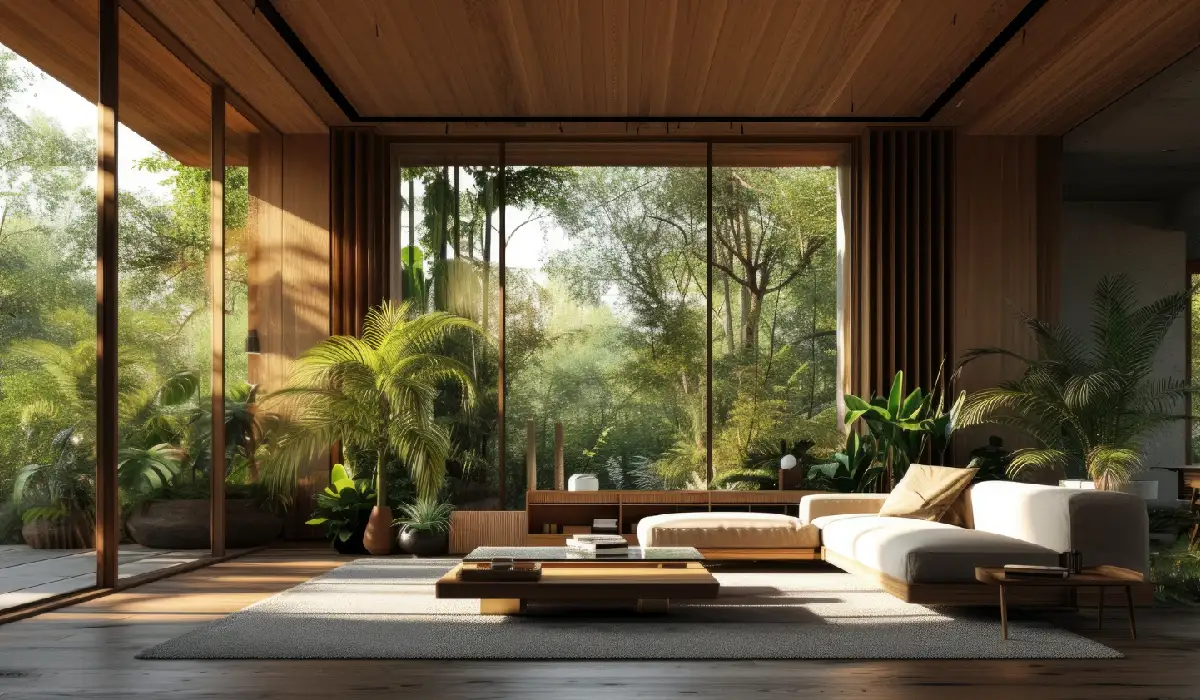
The way we live is changing. The walls that once defined where a home began and ended are slowly vanishing. Homes are no longer just internal spaces; they’re experiences that flow. The kitchen spills out into the patio. The living room continues onto the terrace. The lines are blurred, and we’re all better for it.
This seamless transition from inside to outside isn’t just a trend; it’s a movement. A growing desire to be closer to nature, to live more openly, and to make the most of every square metre we have. Whether you’re in a city apartment or a countryside cottage, there are ways to connect your interior with the great outdoors.
Start with the floor
If you want your indoor and outdoor spaces to feel connected, start from the ground up. Flooring plays a crucial role in tying two spaces together. The simplest trick is to choose similar colours, textures, or materials for both areas.
A popular approach is using large format tiles indoors and continuing the look with composite decking outdoors. It doesn’t have to be an exact match, just enough to suggest a continuation. Composite decking offers a clean, wood-effect finish that feels modern but natural, making the transition feel smooth and organic.
Open up the barriers
One of the strongest ways to create a seamless indoor-outdoor vibe is to break down the barriers, literally. Sliding or bi-fold doors are perhaps the most effective solution. When open, they create a wide, uninterrupted threshold between your living room and your garden or terrace.
If full glass doors aren’t an option, consider adding large windows or even a pass-through hatch from your kitchen to your outdoor dining area. Even a well-placed mirror can reflect the outdoors and bring it visually closer.
Keep the palette consistent
Consistency in colours, finishes, and materials creates harmony. If your living room is full of warm neutral tones such as beige, soft greys, and sand, carry those same shades into your outdoor furnishings and decor. It doesn’t need to be an exact match, but complementary tones go a long way in blurring the boundary.
Natural materials like rattan, linen, stone, and timber-inspired surfaces work beautifully in both environments. When styling the garden or terrace, think of it as another room in your house, just one without a roof.
Duplicate the function
Another trick to achieving flow is mirroring the function of your indoor space outdoors. If you have a dining room near your back doors, consider placing an outdoor dining area just beyond it. It creates a rhythm and balance that draws the eye and makes both areas feel like part of the same environment.
The same goes for relaxation zones. Got a cosy corner with an armchair and a reading lamp? Set up an outdoor nook with a similar feel: a lounge chair, a side table, and a soft throw for chillier evenings.
Let lighting lead the way
Lighting is often overlooked in garden design, but it’s essential in creating ambience. Indoors, lighting sets the tone. It’s warm and soft in the living room, bright and functional in the kitchen. Bringing this layered approach outdoors helps maintain continuity.
String lights, lanterns, and uplighting around plants or architectural features echo the warmth of indoor fixtures. If you have dimmable or smart lights indoors, mirror that flexibility outside for a unified feel.
Bring the outdoors in
Connection is a two-way street. While you’re extending your living space outwards, bring the outdoors in as well. Houseplants are an obvious choice, but you can also use natural textures and earthy tones in rugs, cushions, and wall art to make your home feel more rooted in its surroundings.
Windowsills can become mini herb gardens. Large leafy plants like monstera or fiddle leaf fig trees create a visual link to the garden. Even natural scents such as wood, citrus, or lavender help make your interiors feel more aligned with nature.
Design for all weather
Living outside is appealing, but only when the weather allows. To make the most of your extended space, invest in shelter and heating so you can enjoy it year-round. Pergolas with retractable roofs, sail shades, or even a glass canopy can protect from sun and showers alike.
Fire pits, patio heaters, or even outdoor rugs and blankets can make evenings outside feel as cosy as being curled up on the sofa. When your outdoor space is usable in all seasons, the connection to your interior feels that much stronger.
Think in layers
Blending your spaces doesn’t mean you have to make them identical. In fact, a bit of contrast, as long as it’s deliberate, can be even more striking. Think of your home and garden as different chapters in the same book. You want the tone and voice to be consistent, but the scenery can change.
Use layering to your advantage. Layers of texture in outdoor cushions, layered planters and pots, different floor levels or surfaces all add depth and help draw the eye from inside to out.
Create privacy without closing it off
Blending indoors and outdoors works best when you feel secure and comfortable in both. Privacy is key, but that doesn’t mean putting up a wall. Green screens made from hedges, bamboo, or trellises covered in vines can create cosy garden rooms without feeling enclosed.
Sheer curtains or outdoor blinds can offer sun protection and seclusion while still allowing light and air to flow. Balustrades, railings, or raised planters can subtly mark boundaries without visually closing off the space.
Make it personal
Finally, as with every part of your home, your outdoor space should reflect your personality. Whether it’s mid-century modern or boho chic, carry your taste outdoors. Add the same attention to detail such as artwork, meaningful objects, and colour coordination that you give your living room or bedroom.
It’s not about perfection. It’s about comfort, ease, and the kind of environment where you feel most at home, wherever the walls may end.
Merging indoor and outdoor living isn’t just a design strategy. It’s a mindset. It’s about expanding your space, your lifestyle, and the way you interact with your environment. By thinking holistically, choosing materials and layouts that flow, and treating the outdoors as an extension of your indoors, you can transform your home into a more open, versatile, and inspiring place to live. And with one good step outside, you might find that the best room in the house has no ceiling at all.